Free estimates · Hablamos Español · Serving all of Tampa Bay
Randoms Lawn Care & Hardscaping · Home

Storm Services

Hurricane preparation for Tampa Bay yards, done before June

Helene's surge in September 2024 and Milton's rain two weeks later showed Tampa Bay what a yard can do in a storm. Dead limbs come through roofs, loose rock and planters turn into projectiles, clogged swales push water toward the house, and curbside debris sits for weeks while crews work through millions of cubic yards. Much of that risk shrinks with work done months earlier, on a calm spring day.

  • 5.0 Google
  • Licensed & Insured
  • 5+ Years
  • Free Estimates
  • Hablamos Español

Overview

Randoms' hurricane preparation visit covers your trees, palms, beds and drainage before the season, then tackles the work in priority order: dead and hazard limbs, roof and driveway clearance, palm cleanup without hurricane cuts, rock-to-mulch swaps near windows and drain clearing on the property. It's a visual walk-through by an experienced crew, not an arborist's risk assessment, and we say so up front.

What's included

  • Pre-season walk-through with photos of every tree and palm
  • Dead, cracked and rubbing limbs removed
  • Clearance over roofs, gutters, pool cages and driveways
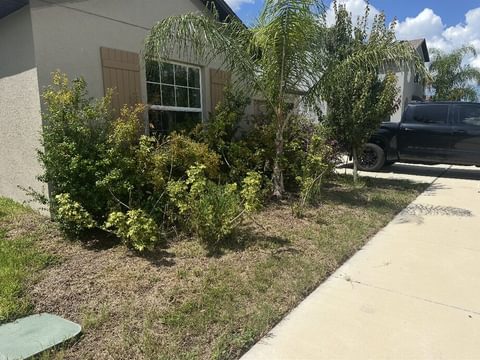
  • Palm cleanup: brown fronds and seed stalks only
  • Hazard-limb removal after permit checks
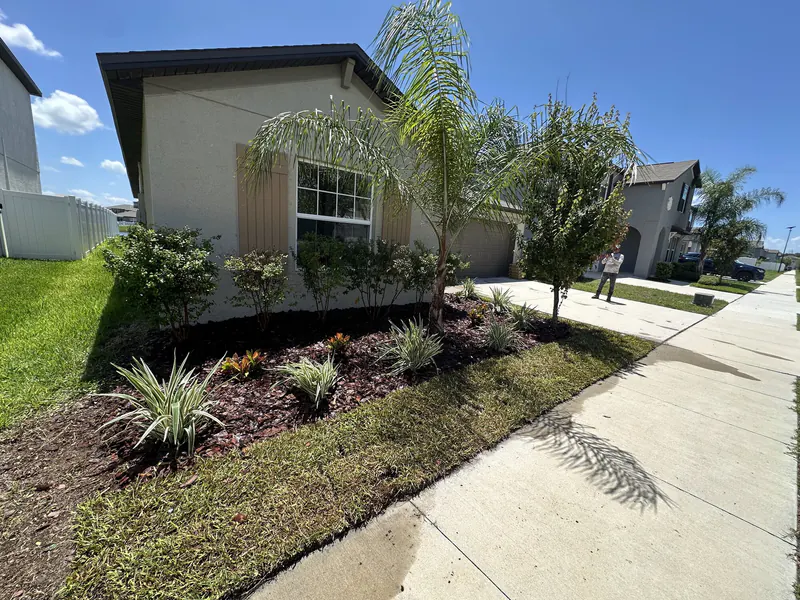
  • Loose rock near windows swapped for mulch
  • Swales, yard inlets and downspout outlets cleared on your property
  • Haul-away before the season, so nothing waits at the curb

The calendar that matters

Atlantic hurricane season runs June 1 through November 30. The climatological peak falls around September 10, and August through early October is the busiest stretch. The best time to prepare is well before any of that: late winter through May, when curbside pickup runs on its normal schedule and fresh pruning cuts have months to close.

Waiting has a hard cutoff. Once a storm warning is issued, major trimming should stop, because collection crews halt hours before tropical-storm winds and a new pile of branches at the curb becomes a pile of projectiles. That's why we encourage booking prep in the spring and treating June 1 as a deadline. Our hurricane yard prep checklist turns the calendar into a printable list.
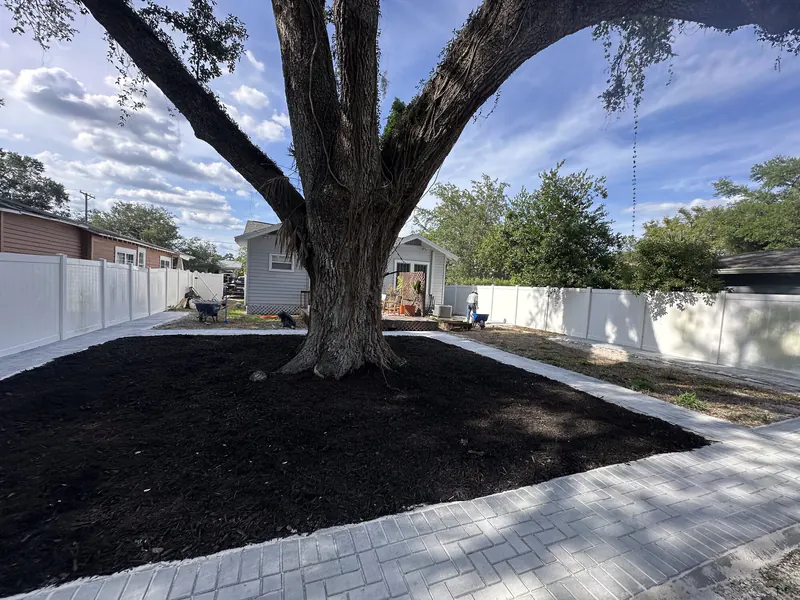
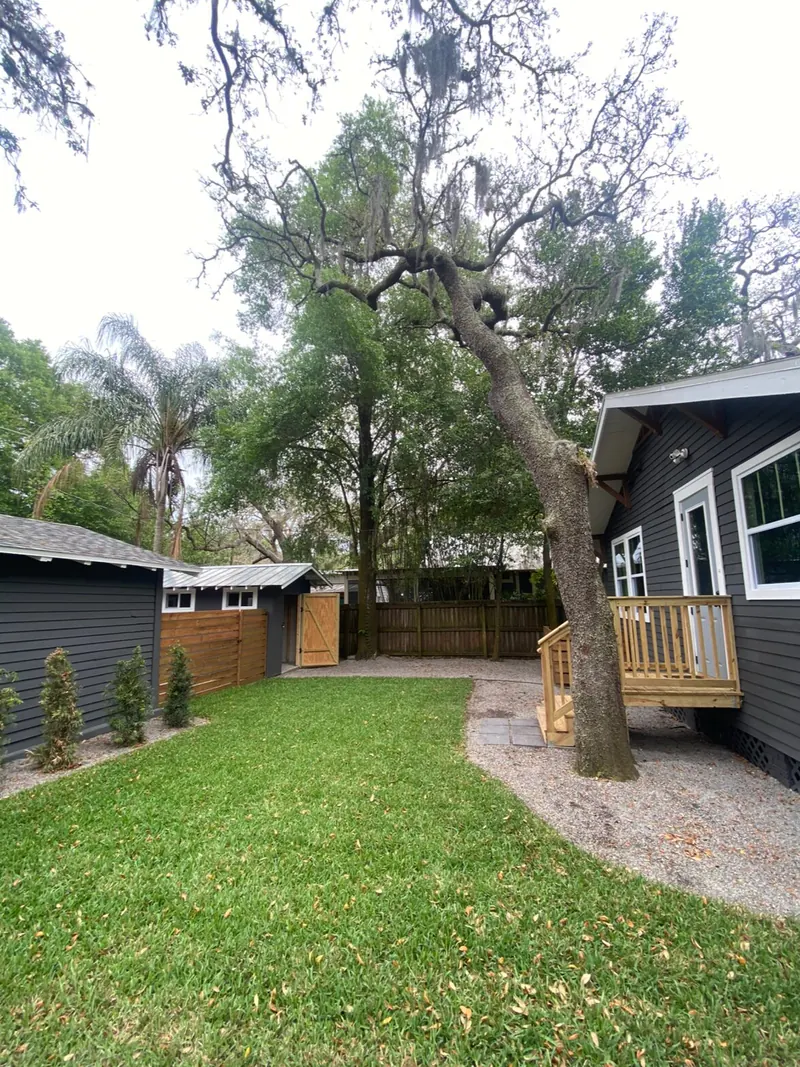
Trees: what the walk-through looks for

UF/IFAS calls correct pruning the most important thing you can do to help a tree survive a hurricane. On the walk-through we look for dead wood, cracked or hanging limbs, branches rubbing each other, limbs over the roof, pool cage or driveway, and trees leaning harder than they did last year. We photograph what we find and rank it, so the riskiest work gets done first.

Species tells part of the story. UF/IFAS ranks laurel oak and water oak among the least wind-resistant trees, so they get a closer look, while live oaks and sabal palms usually ride out storms well when they're pruned properly. UF/IFAS also suggests having large trees evaluated about every two years. If something looks structurally serious, we'll recommend having an arborist assess it rather than guess. The pruning itself follows our tree trimming standards.

Palms, rock and loose items

Palms are where well-meaning prep does the most harm. The hurricane cut, leaving a palm with a few upright fronds, weakens it, and UF/IFAS research found unpruned palms fared better in the 2004 storms. Before the season we remove only fully brown fronds, coconuts and seed or flower stalks that could fly, and leave the green crown alone.

Rock is the other quiet hazard. The Federal Alliance for Safe Homes (FLASH) warns that loose rock and gravel near a house can become projectiles in hurricane winds, so we swap decorative rock under windows and beside sliding doors for mulch, and keep any remaining rock contained. While we're there, we flag planters, yard décor, furniture and anything else that should be tied down or brought inside when a storm is forecast.

Drainage before the rain

Wind gets the headlines, but water does much of the damage in a Tampa Bay storm. During Milton, nearly 19 inches of rain fell on St. Petersburg, with more than five inches in a single hour. A yard inlet packed with leaves, a swale filled with mulch or a downspout dumping against the foundation can turn heavy rain into water at the door.

Part of every prep visit is clearing what sits on your property: swales, yard inlets, French drain grates and downspout outlets, plus the leaves and debris that would wash into them. We make sure water has a path away from the house, and we never push debris into public storm drains, which only moves the flooding down the street. If drainage problems turn out to be grading problems, our site preparation crew can fix them after the season.

When a storm is forecast

At that point the job is securing, not cutting. Bring in or tie down planters, décor, furniture and anything loose. Don't put new branch piles at the curb, since collection stops before the storm arrives. Take date-stamped photos of your trees, fences, beds and structures; they're useful if you file an insurance claim later, though what a policy covers is between you and your insurer.

After the storm, give the yard a careful look before walking it, stay far from any downed line, and reset your irrigation controller if the power went out, since a schedule running on the wrong day can still draw a citation. When the yard needs work, our storm cleanup crews move in with rapid response during business hours, starting with whatever blocks access to your home.

How it works

Hurricane preparation, step by step

  1. Step 1: Pre-season walk-through

    We walk the trees, palms, beds and drainage, and photograph anything that needs attention.

  2. Step 2: Prioritized scope

    You get a ranked list: hazards first, then clearance, palms, rock swaps and drains.

  3. Step 3: Work done before peak season

    Pruning, cleanup and haul-away are finished well before August, ideally by June 1.

  4. Step 4: Pre-storm reminder

    When a storm is forecast, you get a short reminder of what to secure and what not to cut.

Service areas

Where we offer hurricane preparation

All service areas

Frequently asked questions

Questions about hurricane preparation

More questions? See all FAQs

Before June 1, have dead, cracked and overhanging limbs pruned, clean palms of brown fronds only, swap loose rock near windows for mulch, and clear swales, yard inlets and downspout outlets. Haul the debris away while pickup runs normally. Then keep a short list of planters, décor and furniture to secure once a storm is forecast.

The climatological peak of the Atlantic season is around September 10, and the busiest stretch runs from August through early October. The season itself lasts from June 1 to November 30. Helene in late September 2024 and Milton in early October 2024 both fit that pattern, which is why yard prep belongs in the spring.

Avoid it. Curbside collection stops before a storm arrives, so branches set out at the last minute just sit there, and in high winds a loose pile can become a pile of projectiles. Do your pruning and haul-away well before the season, and once a storm warning is issued, focus on securing the yard instead of cutting.

Loose rock and gravel near the house can be. The Federal Alliance for Safe Homes (FLASH) warns they can become projectiles in hurricane winds and recommends mulch near the home instead. Rock farther from windows and doors, contained by edging, is less of a concern. We can swap rock for mulch in the beds that sit right under glass.

No. It's a visual walk-through by an experienced tree and landscape crew, focused on dead wood, clearance, palms, loose items and drainage. A formal risk assessment, like the signed documentation Florida Statute 163.045 requires to remove a hazardous tree without a permit, comes from your own ISA-certified arborist or a Florida-licensed landscape architect (Randoms doesn't provide these assessments). If we see a serious structural problem, we'll tell you and recommend that assessment, then work from the signed report.

Yes. Date-stamped photos and a short video of your trees, fences, beds, pavers and structures show their condition before the storm, which can help if you file an insurance claim later. Take them from several angles once your prep work is done. What a policy covers depends on your insurer; the photos simply make the record clearer.

Free Estimates

Get your free estimate

Pre-season pruning, palm cleanup, drain clearing and loose-item checks before June 1.

If we miss your call, we'll text you back from this number during business hours. Msg & data rates may apply; reply STOP to opt out.

Free Estimates · Hablamos Español

Ready to start your project?

Tell us about the yard. We'll recommend the right fix and put it in a free written estimate.

Call or text (813) 359-9722 · Mon–Sat 8:30 AM – 7:00 PM · Sun closed