Free estimates · Hablamos Español · Serving all of Tampa Bay
Randoms Lawn Care & Hardscaping · Home

Hardscape

Paver patios, walkways & driveways built to stay flat

A paver job looks finished the day the joint sand goes in. Whether it still looks that way in five years depends on what nobody sees: how deep the base was dug, how well it was compacted, which way the water drains and what holds the edges. In Tampa Bay, with sandy soil, a high water table and afternoon downpours from June through September, shortcuts show up fast as sunken corners and wandering joints.

  • 5.0 Google
  • Licensed & Insured
  • 5+ Years
  • Free Estimates
  • Hablamos Español

Overview

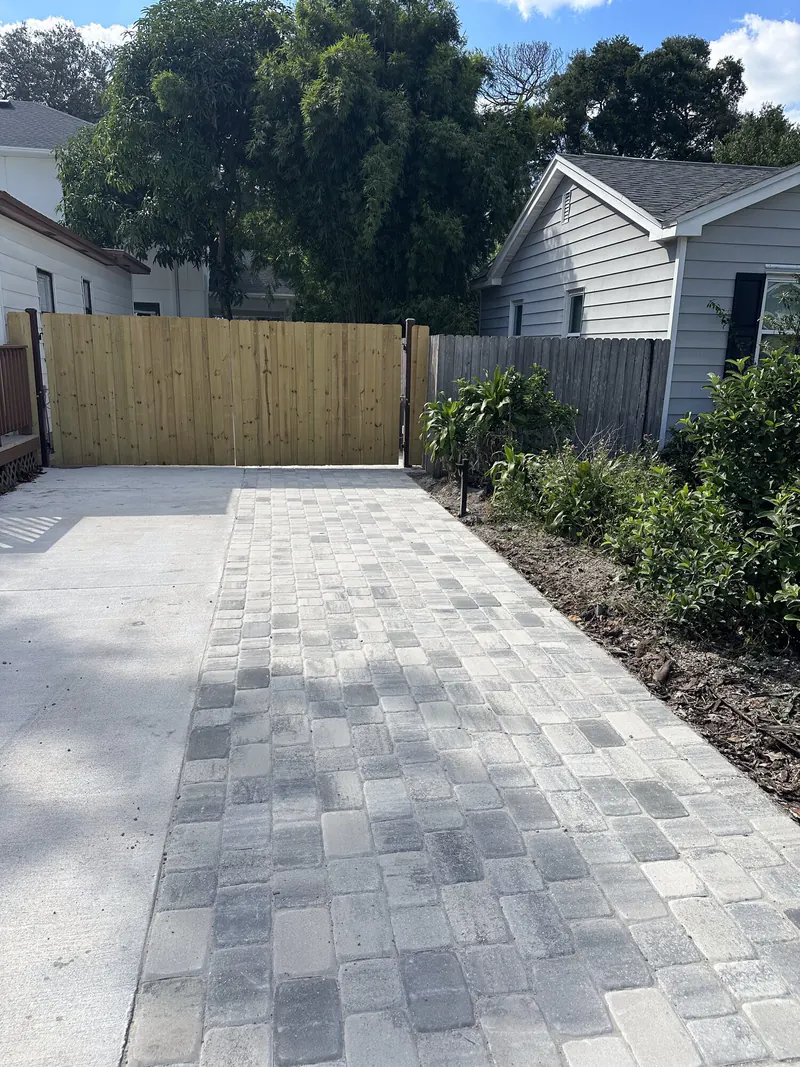
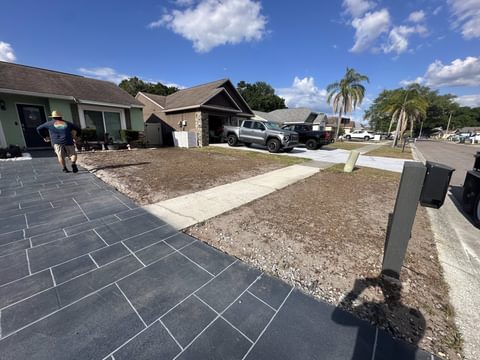
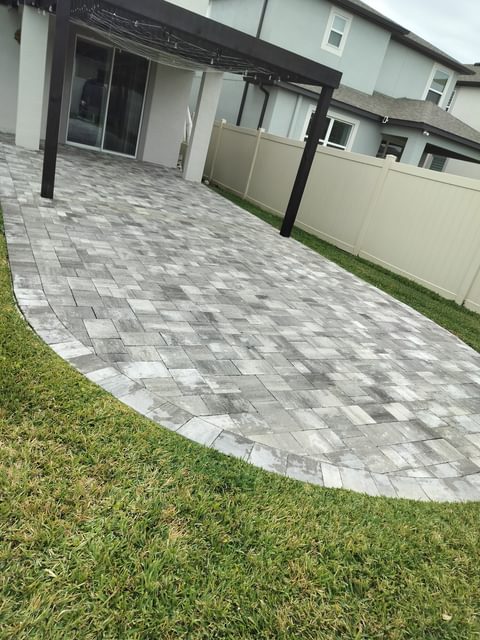
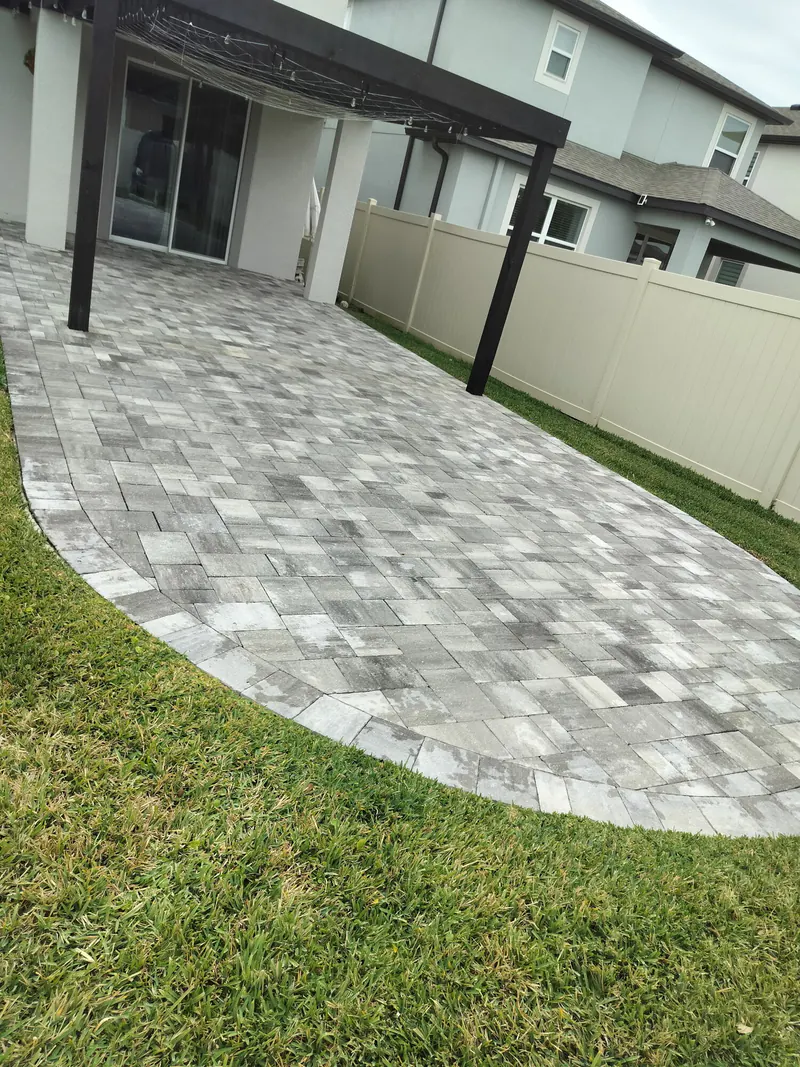
Randoms builds patios, walkways, driveways and extensions, pool decks and borders with concrete pavers, clay brick and travertine. Every job starts with a site visit to check grades, drainage, utilities, trees and HOA rules, and ends with a walk-through and a care guide. Browse real finished work in our project gallery.

What's included

  • Layout, pattern and color chosen from real samples
  • Excavation and haul-off of soil, sod or old concrete
  • Compacted aggregate base, built in lifts
  • Screeded sand bedding, laying and clean cuts
  • Edge restraint or a concrete border so pavers can't creep
  • Polymeric joint sand, final compaction and cleanup
  • A care guide, with sealing available as an option

Concrete, clay or travertine?

Most Tampa Bay patios and driveways use concrete pavers. The ASTM C936 standard calls for an average compressive strength of at least 8,000 psi and average absorption no higher than 5%, which is why a quality paver shrugs off our heat and rain. A 2⅜-inch (60 mm) paver handles patios and residential driveways; 3⅛-inch (80 mm) units are meant for heavier vehicles.

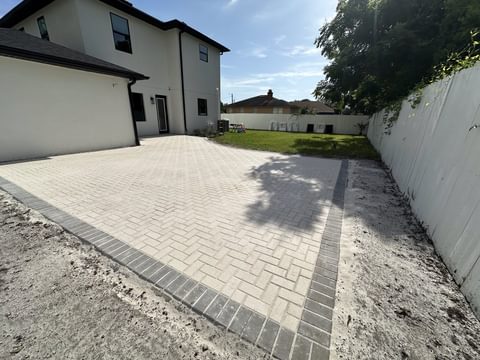
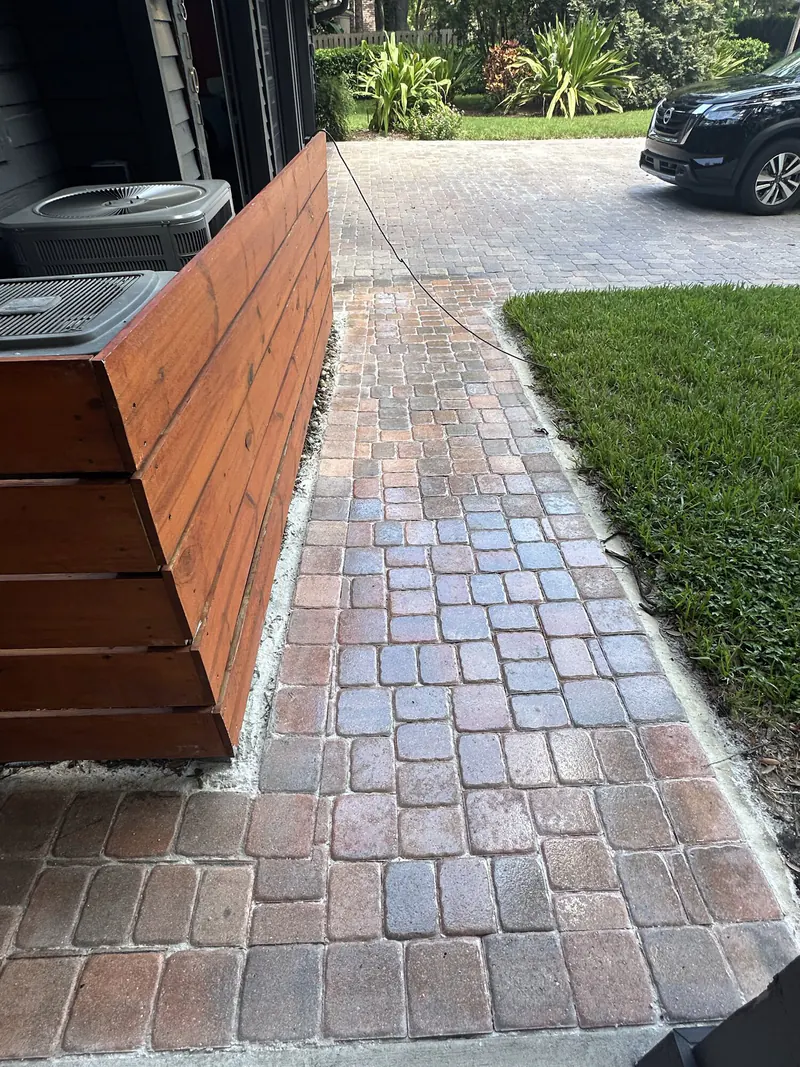
Clay brick gives the warm red tone you see on older porches and garden walks. Travertine is the pool-deck favorite: natural stone, comfortable underfoot and sealed to resist stains. Pattern matters as much as material. Herringbone is the usual pick for driveways because it interlocks under turning tires, though it takes more cuts; running bond and basket weave suit patios and paths.
What's underneath: base, bedding and slope

The base does the structural work. Industry guides call for 4–6 inches of compacted aggregate under patios and walkways and 6–8 inches or more under driveways, compacted in 2–4-inch lifts to 98% standard Proctor density. On top goes about an inch of concrete sand as bedding, never stone dust or masonry sand, which hold water and shift. The finished surface slopes 1–2% away from the house so rain never runs toward your foundation.

Local soil adds a wrinkle. Many lots sit on Myakka-type sands where the water table can rise within 18 inches of the surface for part of the year, so we plan drainage before we dig and lay geotextile fabric where fine sand could migrate into the base. When a yard needs real regrading first, our site preparation crew handles it.

Edges, joints and the rainy season

Pavers without a real edge creep outward a little every time a tire rolls across them. We restrain every field with a poured concrete border or bond beam, or with spiked PVC or aluminum edging where lawn or mulch will hide it. A contrasting soldier course, like the charcoal borders in our gallery, works as trim and structure at once.

Joints get polymeric sand, which hardens to resist washout, weeds and ants. It has to cure dry, and from June through September afternoon storms build on most days, so we watch the radar and schedule the sweep-in and activation for a dry window. On older pavers, weeds and ant hills in the joints usually mean the sand washed out; cleaning and re-sanding with polymeric sand fixes it.

Permits, HOAs and utilities

A driveway is the paver job most likely to need paperwork. The City of Tampa requires a residential driveway permit; the plan shows property lines, the right-of-way and nearby trees, and specimen trees 24 inches or more in trunk diameter get a 15-foot protective distance. Unincorporated Hillsborough requires a Driveway Access permit to connect to a county road, and Clearwater has a dedicated Brick Paver Driveway right-of-way permit. In St. Petersburg, flatwork no more than 12 inches above grade is exempt from a building permit, though setbacks still apply.

Patio rules vary by address, so we check with your city or county and your HOA's architectural committee before quoting, and we tell you exactly what each one will want to see. Approval is always the agency's call. Every dig starts with a Sunshine 811 locate ticket.

Care, sealing and resale value

Pavers ask for little: sweep, rinse and top up the joint sand if it washes low. Sealing is optional. It deepens color and helps resist oil, rust and leaf stains, and around a pool it's worth doing on travertine. Because pavers flex instead of cracking at random, a stained or sunken piece can be lifted out and replaced, something a poured slab can't offer.

They can also pay you back. In the 2023 Remodeling Impact report from the National Association of Realtors and the National Association of Landscape Professionals, Realtors estimated a new patio recovers about 95% of its cost at sale. Planning one? Our paver planning guide covers sizes, materials and permits step by step.

How it works

Pavers, step by step

  1. Step 1: Site visit

    We check grades, drainage, utilities, trees, HOA rules and what your address needs for permits.

  2. Step 2: Design and written scope

    You choose pattern, color and borders from samples and get a scope listing base depth and edge details.

  3. Step 3: Excavate and build the base

    We dig out, haul off, add fabric where needed and compact the aggregate in lifts.

  4. Step 4: Lay, cut and lock

    Bedding sand, pavers, clean cuts, edge restraint and polymeric sand, timed for dry weather.

  5. Step 5: Final walk-through

    We walk the finished job with you, answer questions and leave a care guide.

Frequently asked questions

Questions about pavers

More questions? See all FAQs

Plan on about 4 to 6 inches of compacted aggregate for patios and walkways and 6 to 8 inches or more for driveways, plus roughly an inch of concrete sand as bedding. The base should be compacted in thin lifts, not dumped and tamped once. On Tampa Bay's sandy, sometimes wet soils, drainage and fabric matter as much as depth.

Yes. Inside the City of Tampa, a paver driveway needs a residential driveway permit, and the plan must show property lines, the right-of-way and nearby trees. In unincorporated Hillsborough, connecting to a county road requires a Driveway Access permit. Clearwater, St. Petersburg and Pasco have their own rules, and your HOA may need to approve the design too.

For most patios and driveways here, yes. Pavers flex with the ground instead of cracking at random, and a damaged or stained piece can be lifted and replaced without a jackhammer. Quality concrete pavers are made to the ASTM C936 strength standard. A slab is quicker to place, but repairs show as patches forever.

Sealing is optional, not required. It enriches color, makes oil and leaf stains easier to clean and helps lock in joint sand, and it's a smart move for travertine around a pool. Unsealed concrete pavers still perform well structurally. If you want them sealed, we'll talk about finish (natural or wet look) and the right time to apply it.

Almost always because the joint sand has washed out. Empty joints give seeds a place to sprout and ants an easy path to dig, and they also let pavers shift. The fix is to clean the joints, refill them with polymeric sand and activate it in dry weather. Spraying the weeds without re-sanding only buys a few weeks.

Standard pavers are not. Their tight joints and dense base shed most rainwater, just like a slab, so drainage has to be planned with slope and outlets. True permeable interlocking concrete pavement is a different system, with wider joints and an open-graded stone base that stores water. If your lot or HOA needs it for stormwater, ask during the site visit.

Free Estimates

Get your free estimate

Patios, walkways, driveways and pool decks built on a compacted base that stays flat.

If we miss your call, we'll text you back from this number during business hours. Msg & data rates may apply; reply STOP to opt out.

Free Estimates · Hablamos Español

Ready to start your project?

Tell us about the yard. We'll recommend the right fix and put it in a free written estimate.

Call or text (813) 359-9722 · Mon–Sat 8:30 AM – 7:00 PM · Sun closed