Free estimates · Hablamos Español · Serving all of Tampa Bay
Randoms Lawn Care & Hardscaping · Home

Clearing & Site Work

Stump grinding in Tampa Bay, from 811 ticket to fresh sod

An old stump is more than an eyesore. It catches mower blades, sends up suckers, leaves a hump where you want lawn and, close to the house, keeps a large mass of wood buried in the soil. Grinding takes the stump and its surface roots down below grade with far less damage than digging them out, and the spot can go straight back to sod, mulch or a new bed.

  • 5.0 Google
  • Licensed & Insured
  • 5+ Years
  • Free Estimates
  • Hablamos Español

Overview

Every Randoms stump job starts with a Sunshine 811 locate ticket, because grinding disturbs the ground just like digging does. We agree on the depth before we start, protect your lawn and beds, then rake out or haul the grindings, backfill with soil and finish the surface the way you want it. Hardwood stumps, palm stumps and commercial lots are all part of the work.

What's included

  • Sunshine 811 locate ticket filed before any grinding
  • Protection for lawn, beds and pavers around the stump
  • Stump ground below grade to the depth we agreed on
  • Surface roots and root flare ground out as needed
  • Grindings raked out as path mulch or hauled away
  • Soil backfill, leveled with settling in mind
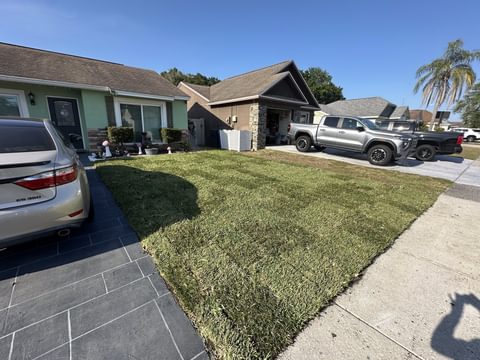
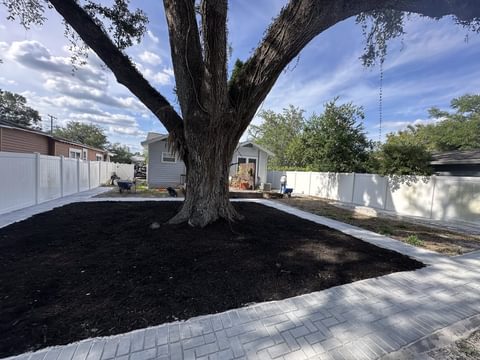
  • Optional sod, mulch or replanting finish
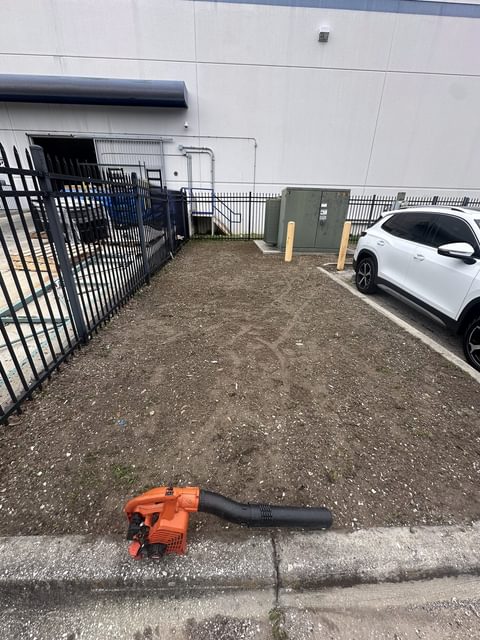
  • Final rake-out and blow-off

Why we file an 811 ticket first

Florida's dig law, Chapter 556 of the Florida Statutes, requires notifying Sunshine 811 (opens in a new tab) two full business days before digging, not counting the day you call, weekends or holidays. Utility marks stay valid for 30 days, and within 24 inches of a mark the work has to be done by hand or with soft methods. The homeowner exemption only covers an owner's own digging down to 10 inches.

A stump grinder isn't named in the law, but its teeth chew well below the surface, often right where irrigation lines, cable and gas services run toward the house. So we treat every grind as excavation and file the ticket first. The practical result: unless a valid ticket is already active, plan on a short wait between your call and the grind. It's the step that keeps a simple stump job from turning into a cut gas line.
How deep depends on what comes next

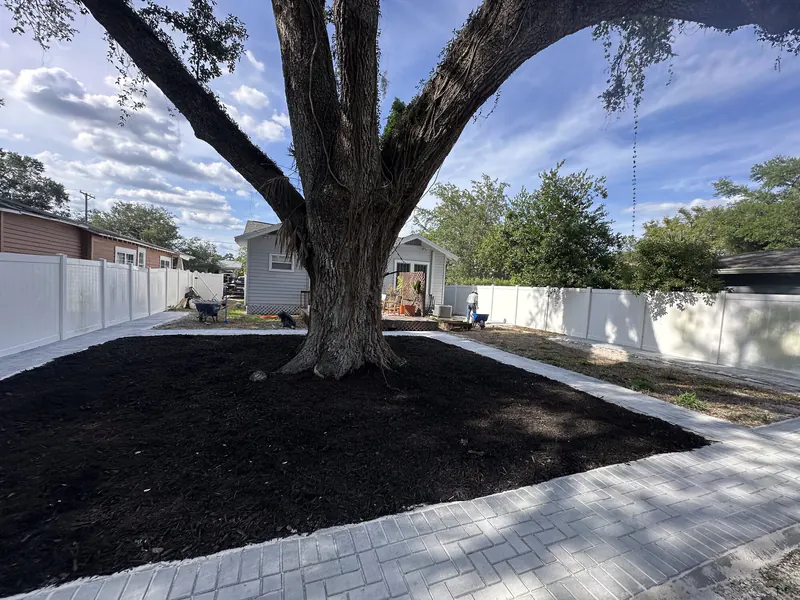
There's no single right depth, which is why we settle it before the grinder starts. If the spot is going back to lawn or mulch, grinding a few inches below grade leaves room for soil and sod to sit flush with the rest of the yard. If you plan to plant a new tree nearby, set a fence post, pour a footing or lay a paver patio over the spot, we go deeper and chase more of the root mass.

Surface roots are their own decision. Oaks and laurel oaks often throw thick roots across the lawn that heave turf and catch mowers. We can grind the root flare and the worst of those runners along with the stump, though roots running under a slab or driveway usually stay put. Every quote spells out the depth and which roots are included, so there are no surprises.

Grindings, backfill and settling

Grinding turns a stump into a pile of wood chips mixed with soil, often far more volume than people expect. You can keep some as a rough mulch for paths or around shrubs far from the house, or have us haul it all away. Grindings make a poor base for sod, so the hole is cleared out and backfilled with soil.

Plan on a little settling. Buried roots keep breaking down for years, and the backfill compacts after a few heavy rains, so we mound it slightly and recommend topping up the spot after the first rainy season. Once it's stable, the area can take fresh sod, mulch or a new planting bed. Going back to lawn? Our guide to choosing sod in Tampa Bay helps match the grass to the spot's sun and shade. Grinding also leaves the deep roots in place to decay naturally, which is far gentler on nearby trees, sprinklers and pavers than ripping them out.

Palm stumps and Ganoderma butt rot

Palms die from several causes in Tampa Bay, and one matters a great deal for what happens after the stump: Ganoderma butt rot. The fungus rots the lower trunk from the inside, often showing up as hard, shelf-like conks on the trunk near the ground. UF/IFAS advises removing or grinding out as much of the stump and root system as possible and bagging the conks for the trash rather than leaving them in the yard.

The fungus persists in the soil, so UF/IFAS also warns against planting another palm in the same spot. If a palm in your yard declined that way, tell us during the estimate; we'll grind deeper, haul the grindings instead of spreading them, and help you choose something other than a palm for that location.

Permits, termites and big root masses

Tree permits cover the removal, not the grinding. If the tree is still standing and it's large enough to be protected, such as 5 inches or more in trunk diameter inside the City of Tampa, the removal permit comes first; our tree trimming page explains how those rules vary around the bay. Once a tree is legally down, grinding what's left is routine.

We don't sell stump grinding with termite scare stories. UF/IFAS research shows wood mulch isn't a termite magnet. Large buried wood is different: a big root mass close to the foundation can host Formosan termites, so grinding out stumps and heavy roots near the house is a reasonable precaution, not an emergency.

How it works

Stump grinding, step by step

  1. Step 1: Measure and check access

    We measure each stump, note roots and nearby structures, and check gate width and slopes for the grinder.

  2. Step 2: File the 811 ticket

    We notify Sunshine 811 and wait the two full business days for utility marks.

  3. Step 3: Grind and backfill

    The stump and agreed roots are ground to depth, grindings are cleared and the hole is backfilled.

  4. Step 4: Finish the surface

    Sod, mulch or a prepared spot for planting, then a final rake and blow-off.

Frequently asked questions

Questions about stump grinding

More questions? See all FAQs

It depends on what goes in that spot next, and we agree on it before we start. Grinding a few inches below grade is enough to finish with soil and sod or mulch. If you're replanting a tree, setting posts or building a patio there, we grind deeper and remove more of the root mass. The depth is written into your quote.

Yes, every time. Florida's dig law requires notifying Sunshine 811 two full business days before digging, and grinding disturbs the ground below the surface, so we treat it as excavation. Marks stay valid for 30 days. That's why stump grinding usually isn't same-day: unless a valid ticket is already active, there's a short wait for the marks.

You choose: keep some as a rough mulch for paths and shrub beds away from the house, or have us haul them all. The hole itself is cleared of grindings and backfilled with soil, because chips make a poor base for sod. Expect some settling over the first rainy season as buried roots break down, so the spot may need a small top-up.

Not if Ganoderma butt rot killed it. UF/IFAS warns that the fungus persists in the soil, so a new palm in the same spot is at high risk. Grind out as much stump and root as possible, bag any conks for the trash, and choose a different kind of plant for that location. If the palm died of something else, replanting is usually fine.

For most yards, grinding is better. It removes the stump and surface roots below grade with little disturbance, while the deep roots decay naturally underground. Digging a stump out tears up a wide circle of lawn, can damage sprinkler lines and neighboring roots, and leaves a large hole to refill. Excavation only makes sense when a footing or foundation is going in.

Usually not for the grinding itself; tree permits apply to removing the tree. If the tree is still standing and protected by size, as with trees 5 inches or more in trunk diameter in the City of Tampa, the removal permit has to come first. Once the tree is legally down, grinding the stump only needs the standard 811 locate.

Free Estimates

Get your free estimate

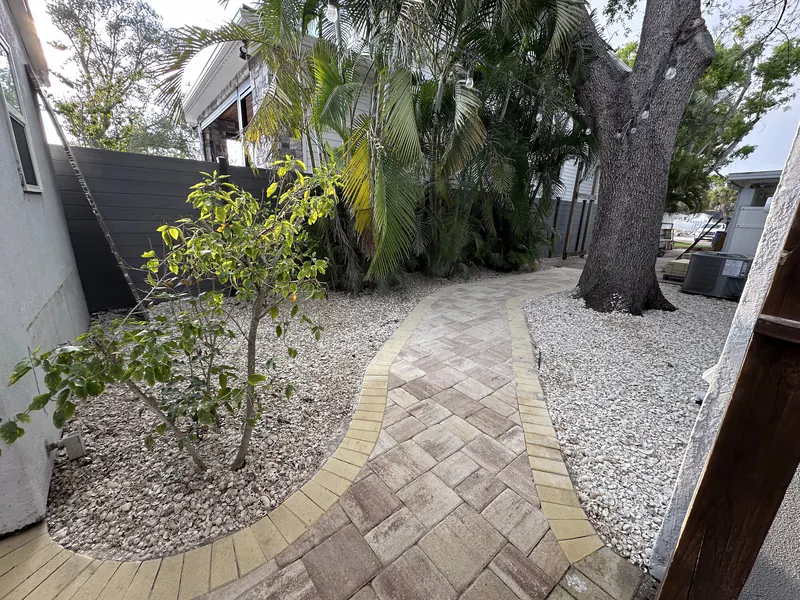
Stumps and surface roots ground below grade, backfilled and ready for sod or mulch.

If we miss your call, we'll text you back from this number during business hours. Msg & data rates may apply; reply STOP to opt out.

Free Estimates · Hablamos Español

Ready to start your project?

Tell us about the yard. We'll recommend the right fix and put it in a free written estimate.

Call or text (813) 359-9722 · Mon–Sat 8:30 AM – 7:00 PM · Sun closed