Free estimates · Hablamos Español · Serving all of Tampa Bay
Randoms Lawn Care & Hardscaping · Home

Landscaping & Installs

Mulch installation in Tampa Bay: right depth, right material

Fresh mulch is the quickest way to make a Tampa Bay yard look cared for, and it does real work: it holds moisture through once-a-week watering, keeps roots cooler in August and slows weeds. Done carelessly, it does harm. Volcano piles against tree trunks invite rot, and mulch heaped against the house fills the inspection gap a termite inspector needs to see.

  • 5.0 Google
  • Licensed & Insured
  • 5+ Years
  • Free Estimates
  • Hablamos Español

Overview

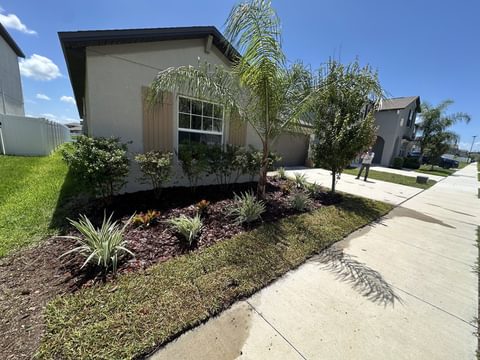
Our crews start every mulch job by hand-weeding, re-cutting bed edges and pulling old, matted mulch back from trunks and foundations. Then we install 2–3 inches of the material you choose, from pine bark and pine straw to eucalyptus, melaleuca or a dyed black, brown or red mulch, plus river rock where it suits paths and downspouts.

What's included

  • Hand-weeding of every bed before new mulch goes down
  • Crisp re-edging along lawn and bed lines
  • Thinning or removal of old, matted mulch
  • Mulch held about a foot off large trunks and clear of stems
  • A 2–3 inch layer of bark, pine straw, eucalyptus, melaleuca or dyed mulch
  • An open inspection strip along the foundation
  • River rock or gravel for paths and downspout splash areas
  • Blow-off cleanup and a refresh reminder

How deep, and how close to the tree?

UF/IFAS guidance is 2–3 inches, three at most, and closer to an inch around seedlings and vegetables. Deeper than that, the layer sheds water instead of letting it through and roots creep up into the mulch. When an older bed settles below two inches, it's time to top up, not to pile a fresh load over the top of a matted one.

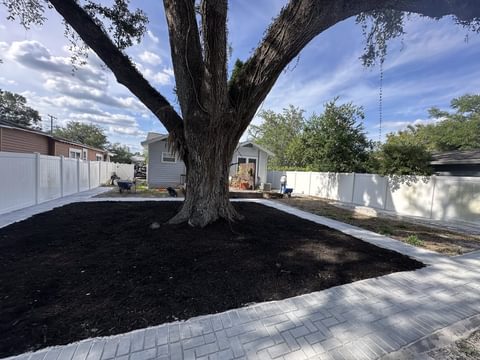
Distance matters as much as depth. We keep mulch roughly a foot from the trunks of large trees and a few inches from shrubs and perennials, and we never build the cone-shaped volcano you see around parking-lot oaks. A good tree ring is wide, eight feet or more across, and flat. We also stop mulch short of curbs, sidewalks and water's edge, where it washes into drains.
Choosing a mulch

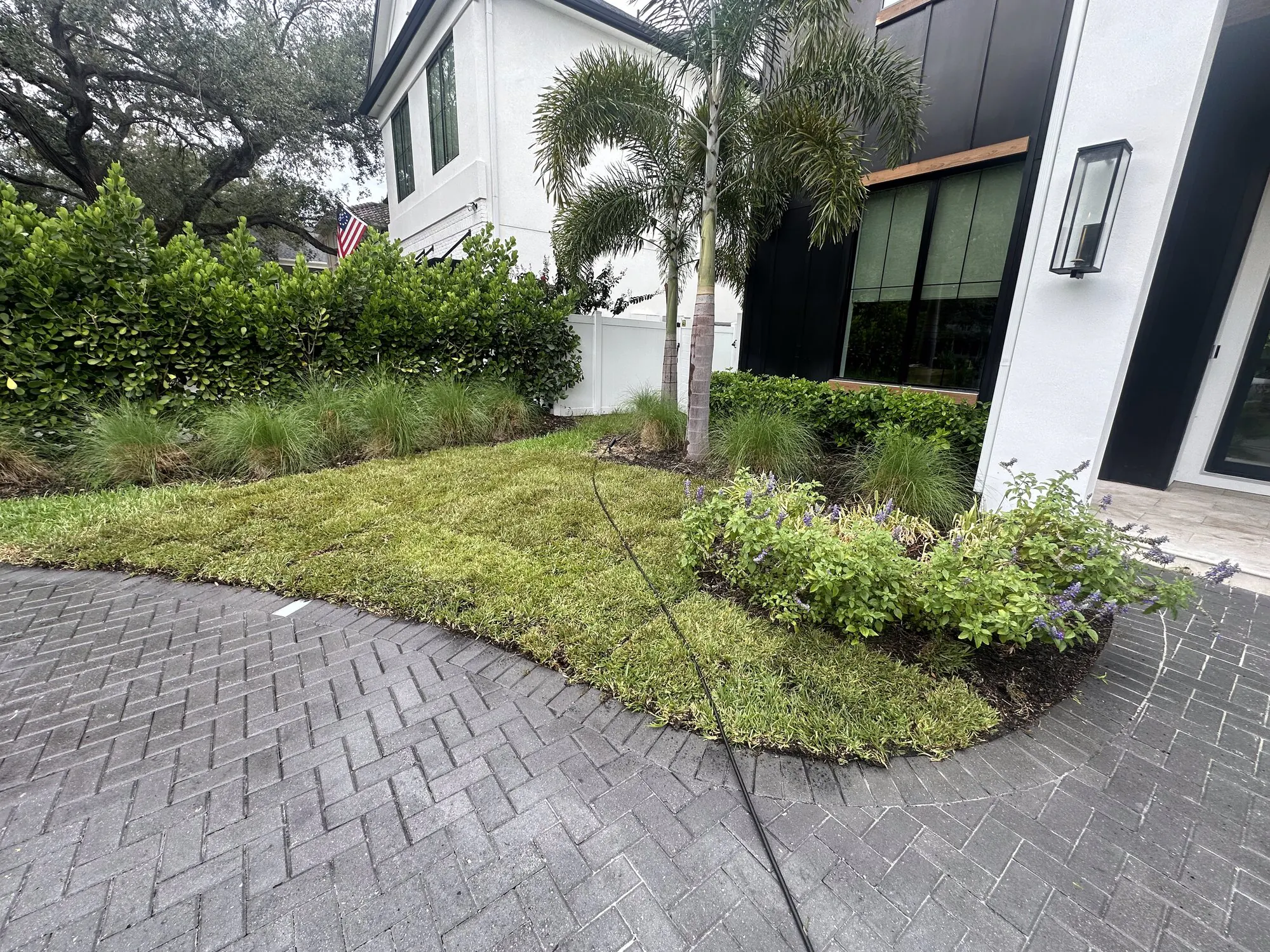
Pine bark is a dependable all-rounder; in UF/IFAS trials it kept about two-thirds of its depth after two years. Pine straw knits together and resists washing out on slopes, but breaks down fastest. Melaleuca (sold as FloriMulch) is made from an invasive tree and proved the most durable in UF trials, while eucalyptus comes from Florida tree farms. The Florida-Friendly program advises against cypress, because much of it is harvested from wetlands.

Dyed hardwood gives that deep black, brown or red look, but some products can contain old treated lumber. We recommend dyed mulch carrying the Mulch & Soil Council seal and keep it away from vegetable beds. Rubber mulch isn't recommended: it heats the soil, floats in heavy rain and can leach. Free utility mulch is fine for paths, not beds, because it carries weed seed.

Mulch, termites and your foundation

A common worry is that mulch draws termites to the house. UF/IFAS termite researchers found that mulch isn't a meaningful termite attractant, so there's no reason to give up mulched beds along your home. What does matter is keeping the foundation visible.

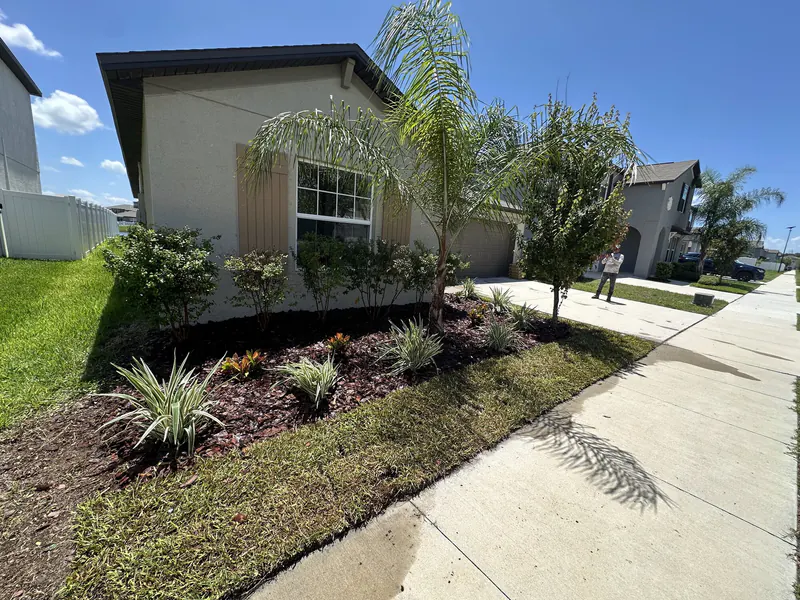
Following the building-code guidance UF/IFAS cites, we leave a six-inch inspection gap at the foundation, keep the layer under two inches within a foot of the walls, and make sure sprinkler heads sit at least a foot away so they aren't soaking the stucco. That strip lets a pest-control inspector see mud tubes and keeps the slab edge dry. If your beds are already piled against the house, pulling them back is the first thing we fix.

Where rock works, and where it doesn't

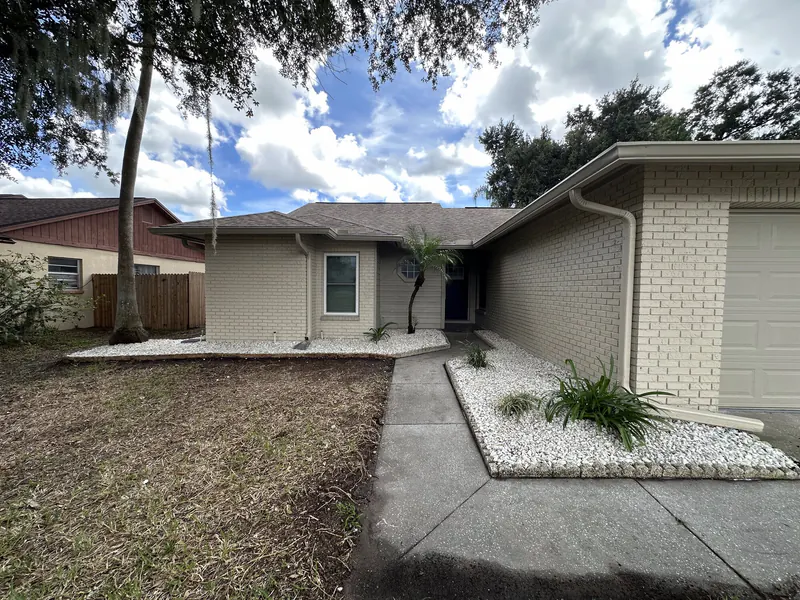
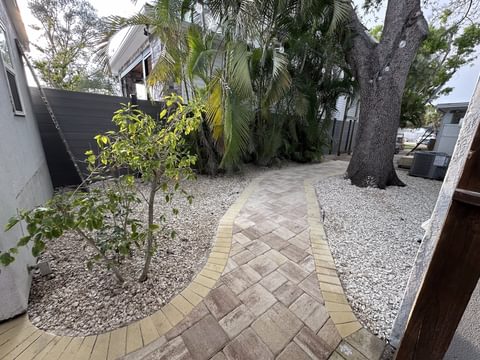
River rock and gravel shine in specific jobs: walkways, downspout splash areas, drainage swales and narrow side yards where nothing grows. A clean white-rock border along a front walk can look sharp, and it rarely needs topping up. In planting beds, though, rock holds heat against roots, lets weeds root in the dust that settles between stones and is hard to remove later.

Storms add one more reason for restraint. The Federal Alliance for Safe Homes (FLASH) warns that loose rock and gravel near the house can turn into projectiles in hurricane winds, so we keep it low, contained and away from windows and sliding doors. Our hurricane yard prep checklist covers the rest, and our landscape design team can blend rock and mulch in one plan.

How often to refresh

There's no single calendar, because every material breaks down at its own pace. Pine straw thins fastest, often within the year, while bark and melaleuca hold their depth much longer. Our rule is simple: measure. Once the layer drops below two inches, or the color has faded more than you like, it's time to top-dress.

Some homeowners like a refresh every spring; HOAs and commercial sites usually prefer a fixed annual cycle so entrances look uniform. If you're on our lawn care rotation, the crew keeps beds weeded between refreshes and flags thin spots before they show. Top-dressing a healthy layer costs less than a full strip-and-replace, so we only remove old mulch when it's matted, moldy or piled too high.

How it works

Mulch installation, step by step

  1. Step 1: Measure and choose

    We measure each bed, estimate cubic yards and help you pick a material and color.

  2. Step 2: Weed, edge and clear

    Weeds come out by hand, edges are re-cut and old mulch is pulled back from trunks and walls.

  3. Step 3: Install to depth

    Mulch is spread 2–3 inches deep, raked smooth, with clearances set around every trunk.

  4. Step 4: Clean up and remind

    Hard surfaces get blown clean and we set a reminder to check depth before the next refresh.

Service areas

Where we offer mulch installation

All service areas

Frequently asked questions

Questions about mulch installation

More questions? See all FAQs

Two to three inches, and never more than three, according to UF/IFAS. Use about an inch around seedlings and vegetables. Keep mulch roughly a foot back from large tree trunks and a few inches from shrubs, and keep the layer thinner near the house. Deeper mulch blocks water and air from reaching the roots instead of protecting them.

Not in any meaningful way, according to UF/IFAS termite research. Mulch beds next to the house are fine as long as you keep a six-inch inspection gap at the foundation, hold the layer under two inches within a foot of the walls and keep sprinklers from soaking the stucco. That gap lets an inspector spot termite activity early.

Pine bark, pine straw, melaleuca and eucalyptus are all good choices; the best one depends on the spot. Pine straw grips slopes, melaleuca and bark last longest, and dyed mulch gives the strongest color. UF/IFAS's Florida-Friendly program advises against cypress mulch because much of it comes from wetland harvest.

Yes, when it carries the Mulch & Soil Council seal. Some dyed hardwood sold without that seal can contain recycled treated lumber, which is why UF/IFAS recommends checking the source and keeping dyed products away from vegetable and herb beds. The dye itself fades over a season or two, so plan on topping up color more often than depth.

UF/IFAS doesn't recommend rubber mulch, because it heats the soil, floats in heavy rain and can leach into beds. Rock works well for paths, downspouts and drainage strips, but not as a general bed cover in our heat. Near windows, loose rock can become a projectile in hurricane winds, so we keep it contained or use mulch instead.

Whenever the layer drops below two inches, which for pine straw can mean a couple of times a year and for bark or melaleuca often once a year or less. Check the depth with a ruler instead of going by the calendar. If old mulch is matted or moldy, thin it first; never keep stacking new mulch on top.

Free Estimates

Get your free estimate

Beds weeded, edged and topped with 2–3 inches of the right mulch, kept off trunks.

If we miss your call, we'll text you back from this number during business hours. Msg & data rates may apply; reply STOP to opt out.

Free Estimates · Hablamos Español

Ready to start your project?

Tell us about the yard. We'll recommend the right fix and put it in a free written estimate.

Call or text (813) 359-9722 · Mon–Sat 8:30 AM – 7:00 PM · Sun closed